What are sight words? A Guide to Dolch & Fry Sight Words
What Are Sight Words?
Sight words are commonly used words that children should recognize instantly without having to sound them out. These words often do not follow regular phonetic patterns, making them difficult for beginning readers to decode. Instead of being sounded out, they are memorized through repetition and exposure.
Why Are Sight Words Important?
- Improve Reading Fluency – Recognizing sight words instantly allows children to read more smoothly and quickly.
- Boost Confidence – When children can read high-frequency words easily, they gain confidence in their reading skills.
- Enhance Comprehension – Struggling to decode words can interrupt comprehension. Knowing sight words helps children focus on understanding the text rather than decoding each word.
What Are Dolch Sight Words?
The Dolch sight word list was developed by Dr. Edward William Dolch in the 1930s-40s. It consists of 220 frequently used words and 95 additional nouns. These words appear in about 50-75% of children’s books, making them essential for young readers.
Dolch Sight Word Categories
Dolch sight words are divided into five levels and one additional category for nouns:
- Pre-Primer (Preschool) – Basic words for early learners (e.g., and, big, see, look, run)
- Primer (Kindergarten) – Slightly more advanced words (e.g., but, must, under, there, came)
- 1st Grade – Includes more functional words (e.g., could, every, some, then, when)
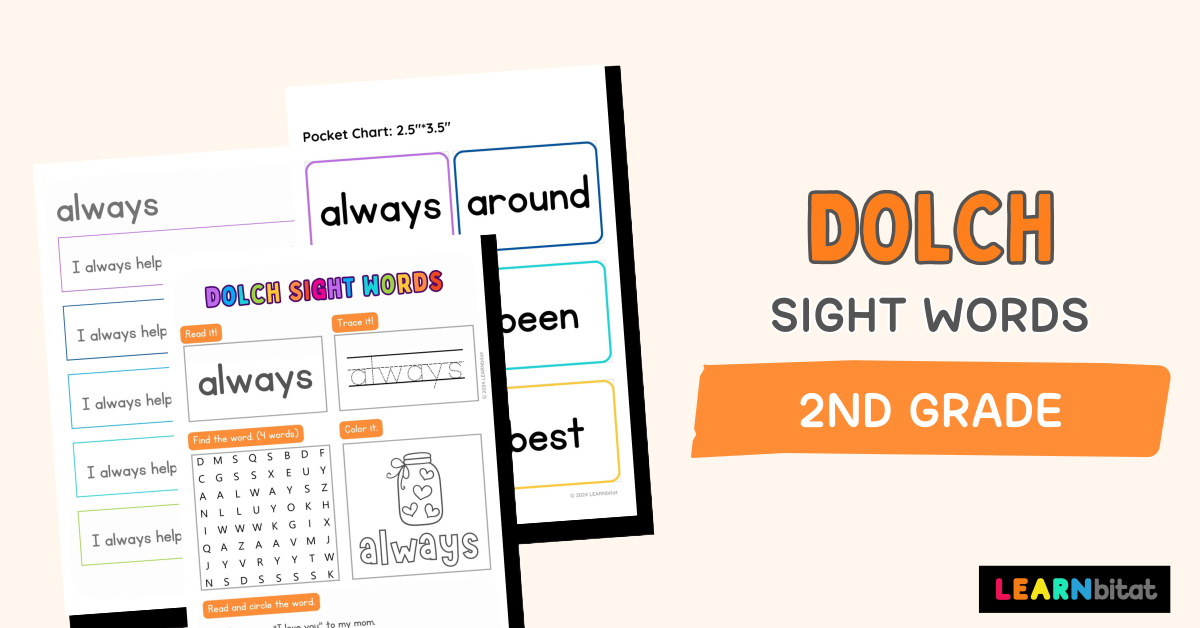
- 2nd Grade – More challenging words (e.g., before, many, always, use, why)
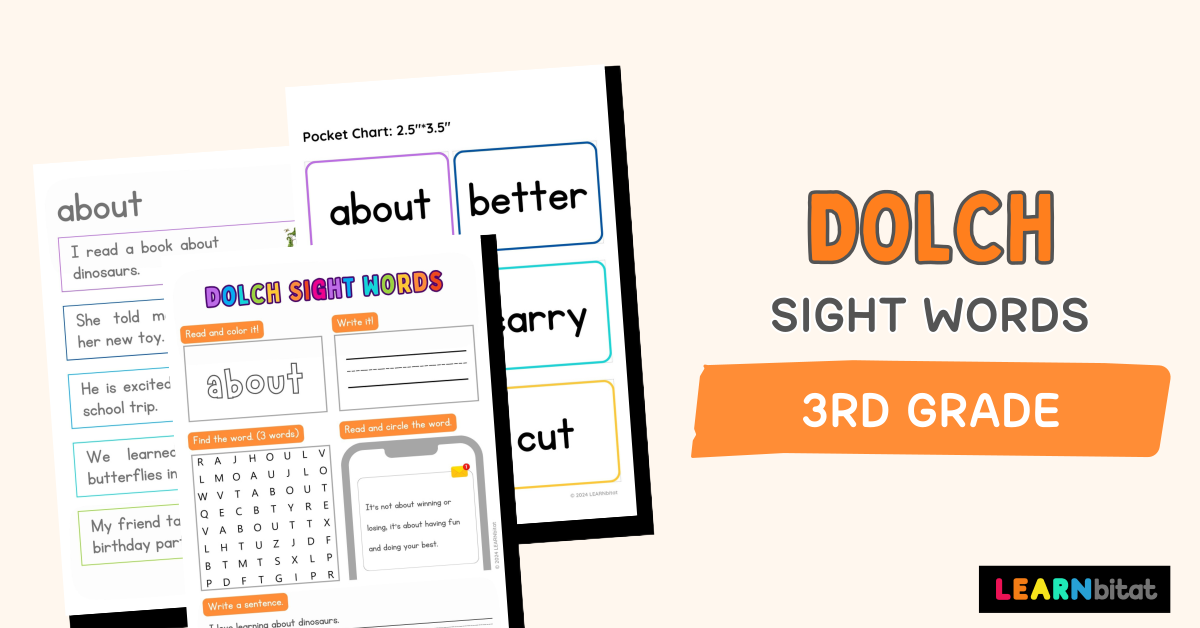
- 3rd Grade – Higher-level words for advanced early readers (e.g., better, full, laugh, shall, seven)
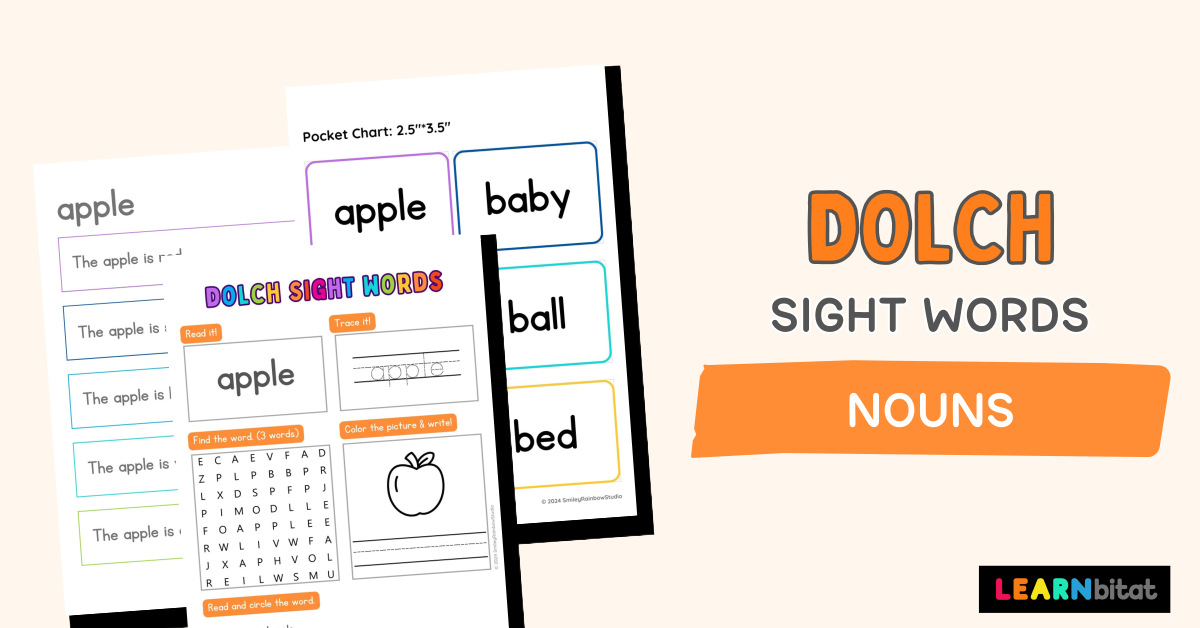
- Dolch Nouns Sight Words – A separate list of 95 common nouns frequently found in children’s books (apple, dog, school, tree, water)
What Are Fry Sight Words?
The Fry sight word list was created by Dr. Edward Fry in the 1950s and later updated. It includes 1,000 high-frequency words, ranked by how often they appear in written texts. These words make up about 90% of all written material.
Fry Sight Word Levels
Fry sight words are grouped in sets of 100, progressing in difficulty:
- First 100 Words – Common words young readers encounter most frequently (e.g., the, of, and, to, in, he)
- Second 100 Words – Expands vocabulary for stronger reading skills (e.g., would, other, number, people, water)
- Third 100 Words – Introduces more advanced words (e.g., picture, answer, America, different, animal)
- Fourth 100 to Tenth 100 – Continues through increasing levels of difficulty, supporting fluency through upper elementary grades
Dolch vs. Fry Sight Words: What’s the Difference?
While both lists aim to improve reading fluency, there are some differences:
- Dolch words focus on early learners (Pre-K to 3rd grade), making them ideal for beginners.
- Fry words extend beyond early readers, supporting reading development into upper elementary levels.
- Dolch excludes nouns (except for a separate list of 95 nouns), while Fry includes them throughout.
How to Teach Sight Words
Teaching sight words should be fun and engaging to ensure children retain them. Here are some effective methods:
- Flashcards – Repetition with visual aids helps kids memorize words.
- Tracing and Writing – Encourages letter recognition and muscle memory.
- Games & Activities – Word hunts, matching games, and bingo make learning interactive.
- Reading Practice – Encourage children to identify sight words in books and sentences.
- Worksheets – Printable worksheets provide structured practice to reinforce learning.
Where to Find Printable Sight Word Worksheets
To help your child master sight words, check out our collection of printable worksheets designed for different grade levels. These worksheets include fun activities such as tracing, coloring, word searches, and fill-in-the-blanks to reinforce learning.
Related Blog Posts
For more specific lists and teaching strategies, check out our other blog posts: